
Rizwan and Imam Cleared for Quaid-e-Azam Trophy, but the Investigation Cloud Has Not Lifted
**संक्षिप्त उत्तर:** पाकिस्तान क्रिकेट बोर्ड ने मोहम्मद रिजवान और इमाम-उल-हक को घरेलू प्रथम श्रेणी क्रिकेट खेलने की अनुमति दे दी है। जियो न्यूज़ की अनाम सूत्रों पर आधारित रिपोर्ट के मुताबिक, प्रेसिडेंट्स ट्रॉफी के शुरुआती छह दौर के लिए अनुमति रोकी गई थी और सातवें यानी अंतिम दौर से पहले मंजूरी मिली। अब दोनों तीन नवंबर से शुरू होने वाली क्वाइड-ए-आज़म ट्रॉफी में खेलेंगे — रिजवान पेशावर के लिए (केआरएल के खिलाफ) और इमाम मुल्तान के लिए (गनी ग्लास के खिलाफ)। **महत्वपूर्ण बिंदु:** यह "बरी होना" नहीं है। किसी भी उपलब्ध जानकारी में यह नहीं कहा गया है कि दोनों पर आरोप तय हुए हैं या उन्हें दोषमुक्त किया गया है। यह एक प्रशासनिक अनुमति है। **चल रही जांचें:** (1) एनसीसीआईए द्वारा ऑनलाइन सट्टेबाजी और जुए के आरोपों की जांच — यह एक राज्य कानून-प्रवर्तन एजेंसी है; (2) इंग्लैंड दौरे के दौरान ड्रेसिंग रूम की जानकारी लीक होने की अलग जांच। इन दोनों को अलग रखा जाना चाहिए; उपलब्ध जानकारी में दोनों खिलाड़ियों का लीक जांच से जुड़ाव नहीं बताया गया है। **तैयारी का संदर्भ:** तीन नवंबर से पहले दोनों के पास प्रतिस्पर्धी लाल गेंद क्रिकेट का लगभग एक ही मैच है, इसलिए किसी भी "फॉर्म वापसी" के दावे का आधार बहुत छोटा है। दोनों अलग-अलग जीवन-चक्र चरणों में हैं — इमाम लगभग 30 वर्ष के हैं (चरम कालखंड में), रिजवान तीस के दशक के पूर्वार्ध में (वर्कलोड प्रबंधन की ज़रूरत)। **स्रोत की सीमा:** रिपोर्ट एक ही आउटलेट की है और अनाम स्रोतों पर आधारित है; कोई बोर्ड या खिलाड़ी का बयान नहीं है। स्वतंत्र पुष्टि ज़रूरी है। **संभावित दिशाएँ:** चरम स्थिति में औपचारिक आरोप और निलंबन; आधारभूत स्थिति में बिना आरोप खिलाड़ियों की वापसी पर प्रतिष्ठा की छाया; सर्वोत्तम स्थिति में जांच बिना प्रतिकूल निष्कर्ष के बंद और बोर्ड द्वारा लिखित "जांच लंबित उपलब्धता" प्रोटोकॉल लागू करना। **अस्वीकरण:** यह विश्लेषण केवल उपलब्ध रिपोर्टिंग पर आधारित है। किसी भी खिलाड़ी पर आरोप सिद्ध नहीं हैं। कुछ आँकड़े सत्यापन लंबित हैं और उपयोग से पहले आधिकारिक स्रोतों से पुष्टि की जानी चाहिए। यह सामग्री केवल खेल-सूचना संदर्भ के लिए है।
The Pakistan Cricket Board (PCB) has permitted Mohammad Rizwan and Imam-ul-Haq to play domestic first-class cricket. According to a Geo News report drawing on unnamed sources, both players made themselves available, and the board granted clearance ahead of the seventh and final round of the President's Trophy Grade-I. Both will now feature in the Quaid-e-Azam Trophy beginning November 3 — Rizwan for Peshawar, Imam for Multan. Rizwan's side faces KRL (Khan Research Laboratories); Imam's faces Ghani Glass.
On the surface this is routine sports news. Two senior internationals are returning to domestic cricket; their teams will be strengthened. But that is not where the real content of this story sits. The real content sits in the gap between "the board withheld permission" and "the board granted permission." That gap was created not by a cricket rule but by an active law-enforcement investigation. Which is why treating this as a selection or form story would be a mistake. It is a governance and integrity story wearing the costume of a team-selection story.
What happened, and in what order
The President's Trophy Grade-I began on September 12. It is Pakistan's separate first-class competition, contested by departmental — that is, institutional and state-owned — employers rather than regional sides. For the first six rounds, the board did not grant either Rizwan or Imam permission to play. Clearance came only ahead of round seven, the final round. In other words, they lost six of the seven available rounds.
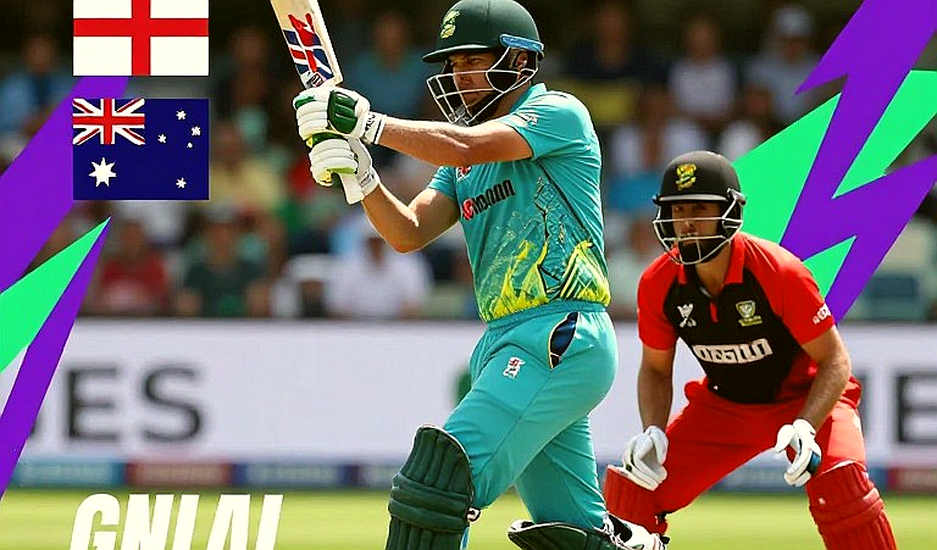
The implication is clear, and it is the single most important fact in this story: before the Quaid-e-Azam Trophy begins on November 3, both players have roughly one competitive red-ball match behind them. For an opening batter and a wicketkeeper-batter — two of the most rhythm-dependent roles in the game — one match is not a preparation block. It is a sharpness top-up.
The detail that both players were captains of their departmental sides also matters. Rizwan has led SNGPL (Sui Northern Gas Pipelines Limited); Imam has led OGDCL (Oil and Gas Development Company Limited). So the board was not withholding permission from fringe squad members but from two leadership figures. That had a double effect: it disrupted SNGPL's and OGDCL's plans, and it magnified the political weight of the eventual clearance.
Clearance is not exoneration
The language matters enormously here. On media and social platforms, the word "cleared" is being read as an acquittal. It is not. Nothing in the available information states that charges have been framed against either player, and nothing states that they have been exonerated of any allegation. What has happened is that the board has issued an administrative permission that it had previously withheld.
This is the central analytical trap of the story. Permission and exoneration are different things. Permission is an administrative decision; exoneration is a judicial or investigative finding. Conflating the two takes the whole narrative in the wrong direction.
One further detail is worth noting. The clearance was granted before the investigation concluded. The logical implication is that the board had no firm written legal basis for continuing to withhold permission. If no charges are framed, no formal suspension notice issued, no code-of-conduct notice served, then keeping a player out indefinitely is risky for the board too. This is a weakness in a system resting on administrative discretion, not proof of the player's innocence.
Two separate investigations, collapsed into one
Two entirely distinct investigations are running here, and public perception has merged them, which is wrong.
The first is by the National Cyber Crime Investigation Agency (NCCIA), into allegations of online betting and gambling. This is a state law-enforcement body, which places the matter squarely in the criminal-regulatory domain rather than purely under cricket's own code. Gambling is illegal in Pakistan, so this investigation likely rests on digital evidence — accounts, apps, transactions — and is not necessarily connected to match-fixing.
The second is different: an inquiry into the leaking of dressing-room information during the England tour. That is a pure team-integrity and anti-corruption matter, because non-public information reaching outside parties can be monetised in betting markets.
It is essential to keep these separate. Nothing in the available information suggests either Rizwan or Imam is a subject of the leak inquiry. Reading the two investigations together artificially inflates the apparent severity against the named players, which the facts do not support.
There is a third issue of the same kind: concern over the fitness-report submission deadline. This is a separate contractual-compliance matter and should not be read as corroboration of the integrity allegations. Bundling the two together in media coverage is a narrative artefact, not evidence.
Two players, two completely different situations
A basic analytical error is being repeated here: treating the two players as two characters in a single story. They sit at opposite ends of the age curve and should be judged on entirely different criteria.
Mohammad Rizwan was born in mid-2026, placing him in the early part of his thirties. Wicketkeeper-batters typically begin a measurable decline in keeping volume and red-ball concentration in the 32–35 band. For him, every additional first-class match is a cost as much as a benefit.
Imam-ul-Haq was born in late 2026, making him about thirty and inside the peak batting window of 27 to 33. For him, every innings right now is an opportunity for maximisation.
The second difference is format. Both competitions — the President's Trophy and the Quaid-e-Azam Trophy — are first-class red-ball cricket. Every performance data point here maps only to Test-format evaluation and must not be carried over to ODI or T20I judgements. Rizwan's limited-overs reputation — and his T20I strike rate, the most criticised element of his game — is entirely separate from the question of whether playing in the Quaid-e-Azam Trophy means anything for the Test side. A strong domestic season will not answer the T20I question, and the reverse is also true.
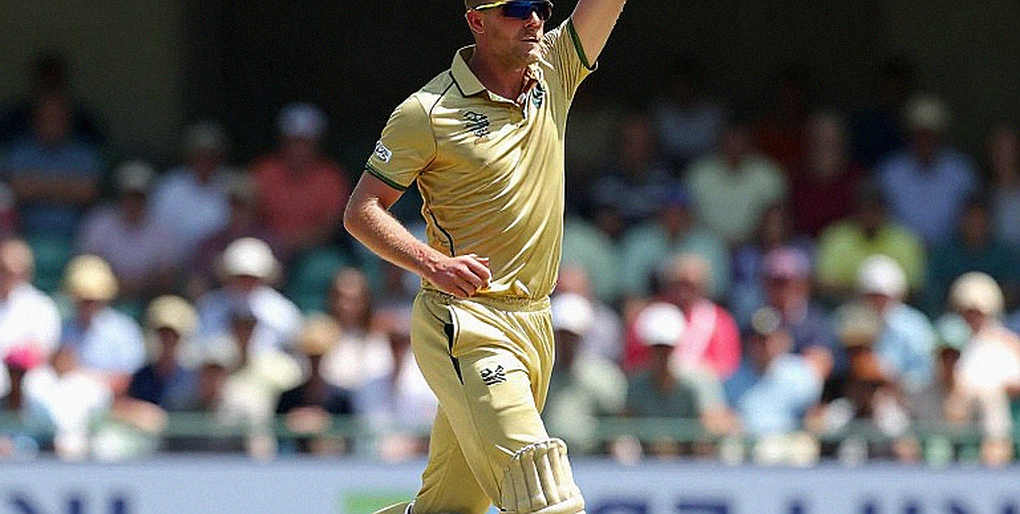
Imam's case carries an additional complication. He is a left-handed opener whose record is very strong on home surfaces — Pakistan and the UAE — which are slow and low. But the thing that has actually limited his away record, the fresh ball moving at pace and the short ball, will simply never be tested in this tournament. His domestic runs will look reassuring and be analytically near-worthless for selection.
Workload and calendar pressure
The sequence of the two tournaments creates a compressed, near-continuous red-ball calendar. The President's Trophy has been running since September 12; the Quaid-e-Azam Trophy starts November 3. No substantial break is visible in between.
For Rizwan, this is the most significant physical risk. For a keeper-batter in his thirties, cumulative squatting and standing load is a genuine lower-back and soft-tissue stress vector. And if he also takes on captaincy immediately on return — full batting responsibility, field settings and full keeping duties — the load compounds further. Peshawar and Multan are both inland, dry, hot-weather venues where first-class surfaces tend to slow and take turn from day three. Multan in particular has a reputation as a spin-assisting surface. On such a surface, Imam's toughest examination will be the new ball rather than spin; for Rizwan, the keeping workload on a turning pitch will be the biggest stress point.
The date adds another dimension. November 3 falls in Pakistan's cooler, low-humidity window — minimal dew, minimal swing assistance, longer days. The operative environmental risk here is scheduling, not weather. The gap from mid-September to the final round amounts to roughly two months of non-competitive status — long enough to erode both fitness benchmarks and selection visibility.
The board's own divided posture
The board both withheld and then granted permission on a discretionary basis. That signals regulatory uncertainty inside the board itself. Plausibly the cricket-operations wing wants capped players playing and match-fit, while the compliance and anti-corruption wing wants distance while the investigation is live. That tension is not made public, so from outside it looks arbitrary.
There is another layer. SNGPL and OGDCL are state-sector enterprises. When their marquee employees are under investigation over betting-related allegations, the reputational spillover does not stay confined to cricket. It becomes public-sector brand risk. This dimension is entirely absent from the report, even though in the long run it may be the heaviest consequence of all.
Direct impact on selection
Pakistan's Test identity is built on home surfaces that reward spin and reverse swing. The team has long struggled in Australia, England and South Africa. That home-away gap is among the widest among full members. Which is precisely why domestic first-class form carries limited predictive value for away tours.
Even so, the cost of this unavailability is being understated. Two capped players — one of them a captain — missed six of seven rounds of the only red-ball cricket available to them. That is not merely a club inconvenience; it is a loss to national-team preparation. Pakistan's domestic model has repeatedly oscillated between regional and departmental structures, which keeps availability rules unstable and produces exactly this kind of administrative limbo.
There is a further structural problem: two parallel first-class competitions running in one season. That thins both the calendar and the data. Selectors get more matches but less clean evidence.
At the same time, the board's discretionary power to withhold permission could set a significant precedent. If it becomes accepted practice, any player can be sidelined indefinitely without charges being framed. That is not a risk to these two players alone but a systemic risk to the entire player pool.
The limits of the sourcing must be stated plainly
The biggest weakness of this report is its sourcing. Geo News attributes the core claims to unnamed "sources." The remaining information points carry no source attribution at all. There is no board statement, no player statement, no named official. This is single-outlet reporting based on anonymous sources on a legally sensitive matter. Before building any further conclusion on it, corroboration from a board statement or a second credible outlet is essential.
The presumption of innocence should also be stated plainly. Nothing in the available information states that charges have been framed against either player, or that either has been found culpable. Every reference to an investigation is an allegation, as yet unproven.
What to watch next
There are three real trigger points. First, the outcome of the NCCIA investigation — closure without action, or referral for prosecution. That is a binary outcome and could deliver the biggest blow to both careers. Second, any name emerging in the dressing-room leak inquiry — if a squad insider is implicated, the story widens well beyond these two players. Third, the announcement of Pakistan's squad for the next Test assignment — inclusion or omission of either player, and the stated rationale, will reveal whether the investigation or the cricket is driving selection.
If both play without controversy in the tournament starting November 3 and score runs, that would be the fastest available route back into Test consideration — because while the legal files remain open, performance is the only lever fully within their control. The first two rounds will be the real credibility window.
But the central risk in this whole story is not cricketing. It is legal and reputational. Losing a season of domestic cricket is recoverable; an adverse integrity finding is not.