
How to Read Cricket Numbers: The Fundamentals of Analysis in the Asian Cricket Context
यह लेख किसी विशिष्ट मैच, खिलाड़ी या श्रृंखला की रिपोर्ट नहीं है, बल्कि एशियाई क्रिकेट के संदर्भ में आँकड़ों को पढ़ने की पद्धति समझाता है। मुख्य बिंदु: (१) प्रारूप (टेस्ट/एकदिवसीय/टी-२०) तय होने से पहले कोई भी मेट्रिक तुलनीय नहीं — १४५ का स्ट्राइक रेट टी-२० में अच्छा, एकदिवसीय में असाधारण, टेस्ट में अर्थहीन। (२) बल्लेबाज़ी में औसत और स्ट्राइक रेट अलग प्रश्नों के उत्तर हैं; स्थितिजन्य विभाजन के बिना औसत सीमाएँ छिपा देता है। (३) गेंदबाज़ी में इकॉनमी रेट नियंत्रण और औसत घातकता मापता है; टी-२० में सात से नीचे की इकॉनमी मज़बूत मानी जाती है। (४) पावरप्ले, मध्य ओवर और डेथ ओवर का अलग-अलग मूल्यांकन अनिवार्य है। (५) घरेलू मैदान का लाभ, ओस, टॉस और डीएलएस को अलग किए बिना सौभाग्य को कौशल समझा जा सकता है। (६) अंपायर्स कॉल और डीआरएस का प्रभाव स्पष्ट रूप से बताया जाना चाहिए, न अनदेखा किया जाए न अतिरंजित। (७) ऊँची नीलामी कीमत वाणिज्यिक संकेत है, खेल-श्रेष्ठता का प्रमाण नहीं। (८) एनओसी, कार्यभार प्रबंधन और लीग बनाम देश का टकराव एशियाई क्रिकेट की स्थायी तनाव-रेखा है। (९) उपमहाद्वीपीय मीडिया में भावना-वृद्धि का गुणांक ऊँचा है, इसलिए 'अगला सुपरस्टार' जैसे दावों को नमूने के आकार से जाँचना चाहिए। (१०) सबसे बड़ा सबक — स्रोत की श्रेणी और ताज़गी सत्यापित करें, और जहाँ जानकारी न हो वहाँ स्पष्ट रूप से ऐसा कहें; अनुमान लगाने से बेहतर है स्वीकार करना।
Cricket is one of the few sports in which every single ball is logged. A Test match produces roughly 2,700 deliveries over five days, each tied to a data point — runs, wickets, boundaries, dot balls, extras. Limited-overs cricket involves fewer balls but a higher data density. That density is simultaneously the greatest strength and the greatest weakness of cricket analysis: a strength because any claim can be checked against numbers, a weakness because a pile of numbers does not automatically produce understanding.
This piece evaluates no single match, series or player. Its purpose is to establish the order in which cricket data should be read, and the limits within which it should be read, specifically in the Asian context — so that conclusions rest on verifiable ground rather than on received opinion.
The first and mandatory step is identifying the format. In cricket, the meaning of a metric shifts with the format, and the shift is sharper than in almost any other sport. A strike rate of 145 is good in T20, extraordinary in ODI, and largely meaningless in Test cricket. A bowling average of 28 is strong in Test cricket but inadequate in T20. The direct consequence is that comparing any player to a career average before the format is fixed is methodologically invalid. Analysis that does not specify the format may look detailed, but its foundation is absent.
Batting assessment rests on two metrics that answer different questions. Average measures runs per dismissal — how long a batter survives. Strike rate measures runs per hundred balls — how quickly a batter scores. Test cricket privileges survival, so average carries more weight; T20 is time-constrained, so strike rate does. But both numbers are insufficient on their own. Situational splits — first innings versus chase, against pace versus against spin, home versus away — reveal which conditions a batter thrives in and which expose him. Without those splits, an average hides a player's limitations as effectively as it displays his strengths.
In bowling, economy rate and bowling average work on the same logic. Economy rate is runs conceded per over, a measure of control; bowling average is runs conceded per wicket, a measure of penetration. In T20 an economy below roughly seven is strong, but that threshold is format-specific and cannot be transferred. Pace and spin figures are not directly comparable either, because their roles differ: a quick bowler's job is to take early wickets with the new ball, a spinner's is to choke run flow through the middle. One yardstick cannot measure both.
Limited-overs cricket divides into three phases, each with its own logic. The powerplay is the fielding-restriction phase — the first six overs in T20 — when bowling strategy centres on taking wickets. The middle overs bring spin into play and a focus on curbing the run rate. The closing overs, called the death overs (overs 16 to 20 in T20), see attacking fields return and scoring rates peak; yorker execution and composure under pressure become decisive. A bowler can post a healthy overall economy rate yet be genuinely expensive at the death; without phase-wise analysis, any bowling assessment is incomplete.
Home advantage in cricket lies in factors that are routinely underweighted. Pitch character, humidity, wind direction, daytime temperature and local crowd support combine into an environment that gives the host side a clear edge. In the subcontinent that edge most often manifests as spin bowling, with slow, turning pitches suited to home spinners. Any team assessment must therefore state whether the side is playing at home or away. Success abroad is qualitatively different from success at home, and collapsing the two into one number is a common analytical error.
Weather and the toss can influence outcomes beyond what skill alone explains. In rain-affected matches the target is revised using Duckworth-Lewis-Stern, a method that repeatedly generates controversy — especially in T20, where a reduction in overs rapidly changes the resource equation. Dew matters too: a wet ball in an evening match reduces a spinner's grip and hands an unearned advantage to the side batting second. Unless these factors are separated out, credit is assigned to the wrong place and luck is mistaken for skill.
Umpiring and DRS form the most sensitive dimension on this list. Under umpire's call, the on-field decision stands when ball-tracking falls within the technology's margin of error. The rule is technically coherent but generates persistent frustration among players and spectators. Any match analysis should state plainly how much umpiring decisions influenced the result — neither ignoring them entirely nor treating them as the sole explanation for a defeat.
At team level, analysis rests on four pillars: batting depth, bowling combination, bench strength and age structure. Batting depth indicates how far down the order a side can be trusted — whether there is a durable batter even at number eight. Bowling combination shows whether the pace-spin ratio suits conditions. Bench strength is the capacity to absorb injury and loss of form. Age structure sets long-term direction: a side dependent on a single generation passes through transition within three or four years. All four must be assessed against format-specific roles, not merely against a list of names.
Asian cricket occupies a distinctive place in the global sports economy. The Indian market generates a large share of worldwide cricket revenue, which makes the clearing price of broadcast rights the reference point for the entire sport. When a league's media rights are sold, the effect does not stay confined to that league; it transmits to other leagues' valuation expectations, franchise valuations, player salaries and even the financial stability of domestic boards. It is essential to understand that a high auction price is a commercial signal, not proof of international cricketing superiority. Conflating the two is among the most common and most costly analytical errors.
The tension between franchise leagues and national teams is Asian cricket's most contentious theme. The key instrument is the No Objection Certificate — a national board's permission without which a player cannot appear in an overseas league. Workload management, central contracts and clashing league windows are issues that recur every season. Any story on the subject should be assessed on whether the board's decision serves the player, the team's long-term interest, or purely revenue protection. The Right to Match mechanism in the IPL belongs to the same logic chain, allowing a previous franchise to retain a player by matching the highest bid.
At governance level, the ICC revenue distribution model has long been contested because it directly shapes the resource balance between large and small boards. Similarly, the suspension of bilateral series between India and Pakistan, and the neutral-venue arrangements that follow from it, are standing examples of Asian cricket's political sensitivity. Analysis here is credible only when anchored in official board announcements and verified reporting, because rumour travels faster than fact in this space.
Public narrative and expectation come last but are not least important. Subcontinental cricket media operate with a high sentiment-amplification coefficient: one good innings is framed as the birth of a superstar, one poor series as the end of a career. Historically, the fulfilment rate for players declared the next superstar has not matched the intensity of the hype. That does not make the excitement wrong; it means every claim should be tested against sample size and format context. Twenty good innings do not determine a career, and three bad matches do not disprove talent.
The most fundamental lesson is data literacy. Before any analysis, the source must be clear: an official board release, a wire service report, a regional outlet, or a social-media claim. Those four carry very different credibility and cannot be collapsed into one category. Recency must be verified too — injury status and selection decisions change within days, so presenting stale news as current misleads the reader. Most importantly, any report should distinguish clearly between what is recorded and what is inferred. Where information is unavailable, saying so plainly is far more professional than guessing. Cricket journalism's hardest problem is not a shortage of data but choosing the right data from an abundance of it — and admitting what is still unknown.
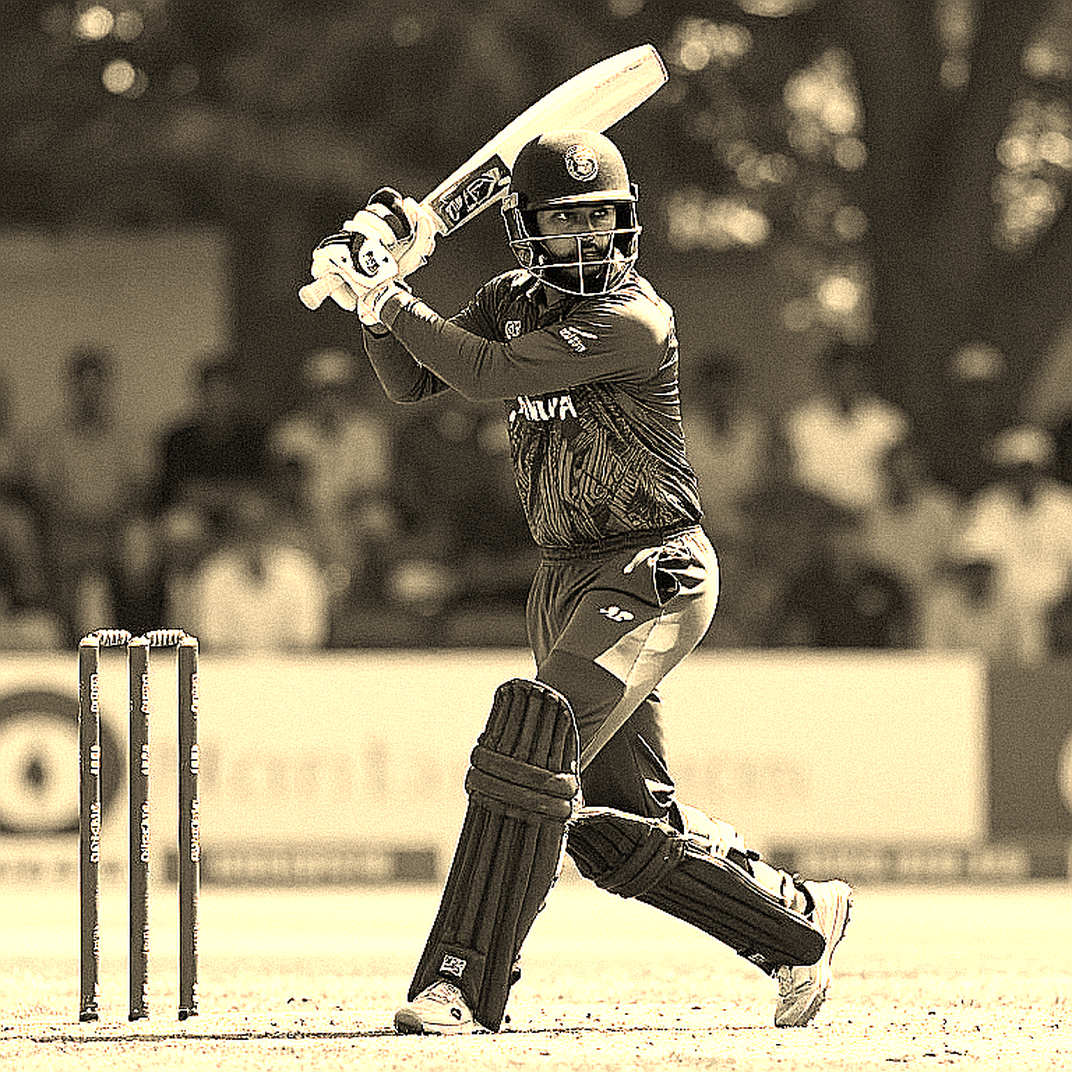
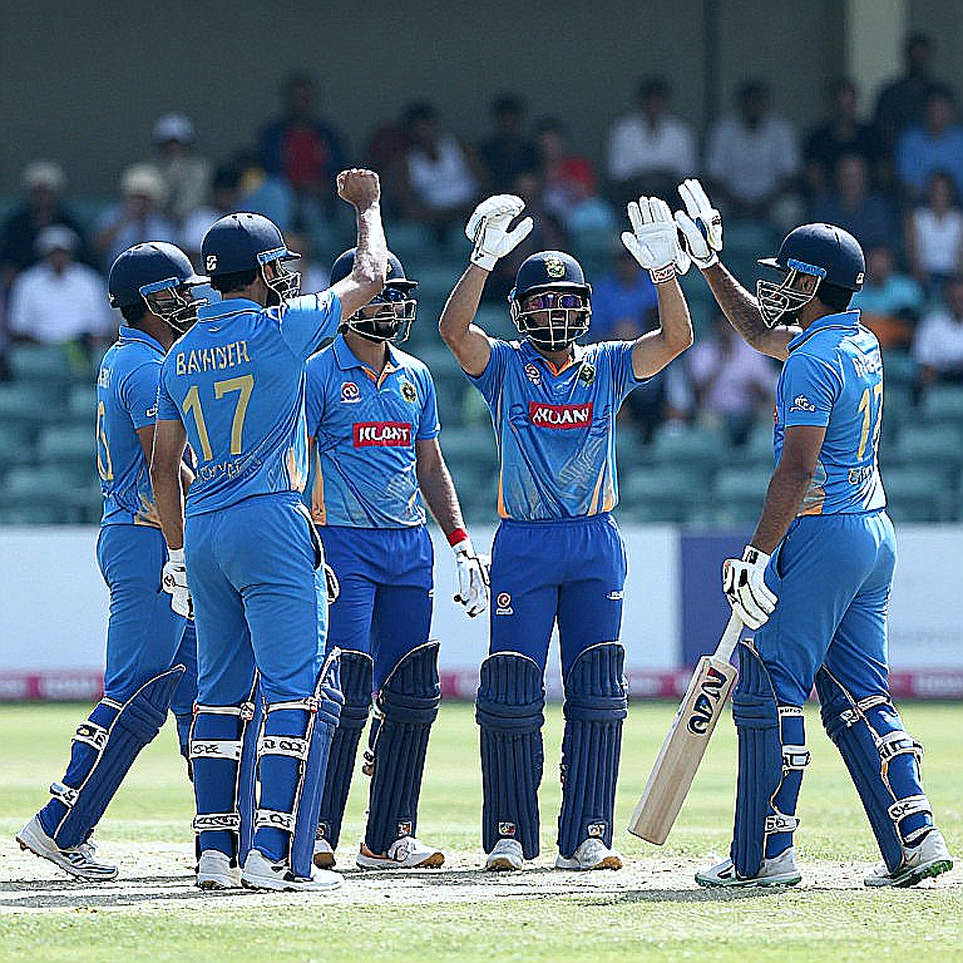

संबंधित खिलाड़ी
लोकप्रिय/पसंदीदा पुस्तकें
When a Cricket Story Has No Cricket Data Left2026-11-10
When the Stage-1 File Came Back Empty: The Old Protocol Lesson Inside an Eight-Dimension Cricket Audit2026-11-10
The Challenge of Empty Inputs in Cricket Analysis: Why Conclusions Without Evidence Are Risky2026-11-09
The Sheet That Came Back Empty: Accounting for the Silence in Cricket Coverage2026-11-09
Hridoy's Double Century, One Sentence from Saif, and the Question Nobody Asked: Which Format Was It?2026-11-09
The Biggest Challenge in Cricket Analysis: Why Missing Sources and Data Leave the Match Story Incomplete2026-11-09
Asian Cricket Analysis Remains Incomplete Without Match Details, Players and Verified Data2026-11-09
The Column the Scorecard Never Prints: Cricket's Real Story Is Written in the Margin2026-11-09
अनुशंसित
Ayush Badoni's Double Hundred and the Delhi Question Batting Cannot Answer2026-10-29
PSL Sixes: PCB's New Six-a-Side Experiment — Calendar Calculation or Strategic Move?2026-10-25
‘Like Batting on a Trampoline’: Unpredictable Wellington Bounce, Strike-Rotation Problems and India's Bowling Discipline Behind New Zealand's Collapse2026-11-08
Lahore's 110: Pakistan's collapse, Sri Lanka's win and the real story of England's exit2026-10-30
Taskin Ahmed’s Question: Why Was a Third Seamer Left Out in the Sylhet Test?2026-11-06
India's Second XI Is the Hardest Team in World Sport — That Is the Real Selection Problem2026-10-29
33 for 4: The Six-Run Window That the Scorebook Could Not Hold2026-10-30
Opener Charged With Raised Bat: Bangladesh Domestic Cricket's 'Level-2' Misconduct Case and the Full Arithmetic Behind the Sanction2026-11-05
अनुशंसित
Not an Official Test, Still 155*: Reading Jaiswal's New Zealand Innings from the Replay Desk2026-11-03
The First Test of Availability: Nahid Rana's Absence and Bangladesh's Mirpur Plan2026-10-24
No Source Information Available for a Cricket Report2026-11-07
Sylhet's Fifth Morning: The Scorecard Doesn't Add Up, and the Real Stake Is Overs, Not Runs2026-11-10
Two Centuries, One Draw, and a Missing Scorecard: The Real Lesson from India A vs New Zealand A2026-11-04
Mirpur Test: Bangladesh Dream of 200 as West Indies Insist 175 Is 'Very Chaseable'2026-10-30
The Silence of Eden Gardens and the Road to Salt Lake: A Transfer Written Not by the Scorecard, but by the Family2026-11-03
Taskin Ahmed’s Question: Why Was a Third Seamer Left Out in the Sylhet Test?2026-11-06
अनुशंसित
Why Lancashire Let James Anderson Go: 50 Wickets at 17.00 and the Cold Economics of County Cricket2026-10-30
The Cape Town Ledger: Starc's Four in Six, and a Comeback Whose Books Are Still Half-Open2026-10-28
From 70/5 to 181: The Real Document in Tilak Varma's Innings Is the 19th Over, Not the 'Finisher' Label2026-10-25
The Incomplete Truth of 213/3: Sadman's 99* and the Test of Bangladesh's Structure2026-10-29
A Test That Bowled No Ball in Greater Noida: The Clearest Photograph of Asian Cricket2026-10-29
A Six-Lakh Receipt, Two Years of Silence: What Ashiqur Zaman's Comeback Actually Proves2026-10-30
Four Days Before Sher-e-Bangla, Bangladesh Changed the Coach, Not the Question2026-10-30
Gill Scored the Hundred, Someone Else Paid the Bill: Auditing a Trolling File Where No Law Actually Applies2026-11-07
अनुशंसित
The Architecture of Asian Cricket: Titles, Leagues and the Reporting Gap2026-11-02
The Asia Cup's Real Contest Is Not in Dubai — It Is on the Broadcast Rights Table2026-11-07
Cricket Keeps Its Reserve Day in the Gulf2026-10-30
Nepal to Host the ICC World Cup Qualifier Playoff: The 4-of-8 Threshold and the Arithmetic of Qualification2026-11-07
The Empty Scorecard: A Record With Every Field Printed and Nothing Written In2026-11-01
Sooryavanshi's Power: What Irfan Pathan's Praise Explains—and What It Leaves Out2026-10-29
India's 200th T20I Win and the Wrong 300-Match Graphic: The Hagley Oval Ledger2026-10-26
The Asia Cup Reserve Day That Was Written for the Broadcast, Not the Rain2026-11-06