
Mirpur Test: The Pitch Is Not Yet Finished, and the 'Spin Web' Claim Is Running Ahead of It
**मुख्य उत्तर**: मिरपुर टेस्ट से पहले पिच पर काम अभी जारी है, इसलिए “स्पिन जाल लौट रहा है” का दावा साक्ष्य से आगे है। वेस्टइंडीज कप्तान रोस्टन चेज़ ने सतह को “ऊपर घास, नीचे सूखा” बताया, जो सामान्य पाँच-दिवसीय टेस्ट सतह का संकेत है। **मुख्य तथ्य**: - रोस्टन चेज़ ने कहा कि सतह पर मैच से पहले और काम हो सकता है — घास कट सकती है या विकेट पर अतिरिक्त तैयारी होगी। - बांग्लादेश कप्तान नजमुल हुसैन शांतो ने पिच के बारे में कोई टिप्पणी नहीं की; उन्होंने केवल तेज़ और स्पिन दोनों में टीम की मज़बूती बताई। - मैच सुबह 10 बजे शुरू होगा; सर्दी की सुबह का पहला घंटा पूरे मुकाबले का सबसे कम स्पिन-अनुकूल समय माना जाता है। - टॉस इस सतह पर सबसे बड़ा अनिर्धारित चर है और मैच-पूर्व रिपोर्ट में इसका उल्लेख नहीं है। - आईसीसी पिच एंड आउटफील्ड मॉनिटरिंग प्रक्रिया के तहत अत्यधिक स्पिन-अनुकूल सतह पर वेन्यू को डीमेरिट अंक मिल सकते हैं। **स्रोत**: मूल मैच-पूर्व प्रेस कॉन्फ्रेंस रिपोर्ट; एकल, अनाम स्रोत; प्रकाशन तिथि उपलब्ध नहीं। स्कोरकार्ड, स्क्वाड सूची, रैंकिंग और सीरीज़ विवरण उपलब्ध नहीं थे। **संबंधित प्रश्न-उत्तर**: प्रश्न: क्या मिरपुर की पिच स्पिन के लिए तैयार की गई है? उत्तर: उपलब्ध बयान सामान्य पाँच-दिवसीय सतह का संकेत देते हैं, अत्यधिक टर्नर का नहीं; अंतिम रूप टॉस के समय स्पष्ट होगा। प्रश्न: इस मैच में सबसे निर्णायक खिलाड़ी कौन हो सकता है? उत्तर: रोस्टन चेज़, क्योंकि वे कप्तान, मध्यक्रम बल्लेबाज़ और फ्रंटलाइन ऑफ स्पिनर तीनों हैं और सतह से उन्हें मदद मिलने की उम्मीद है। प्रश्न: बांग्लादेश के लिए सबसे बड़ा जोखिम क्या है? उत्तर: 10 बजे के शुरुआती सत्र में स्पिन-भारी गेंदबाज़ी चुनना, जबकि वह घंटा पारंपरिक रूप से सीम गेंदबाज़ी के लिए अनुकूल होता है।
Mirpur's Sher-e-Bangla National Cricket Stadium, press conference room. One question went to both captains, one after the other: how is the pitch? Bangladesh captain Najmul Hossain Shanto declined to answer. West Indies captain Roston Chase did — and his answer turned out to be the most precise piece of cricket information of the day: “There's grass on top, the lower part is still dry.”
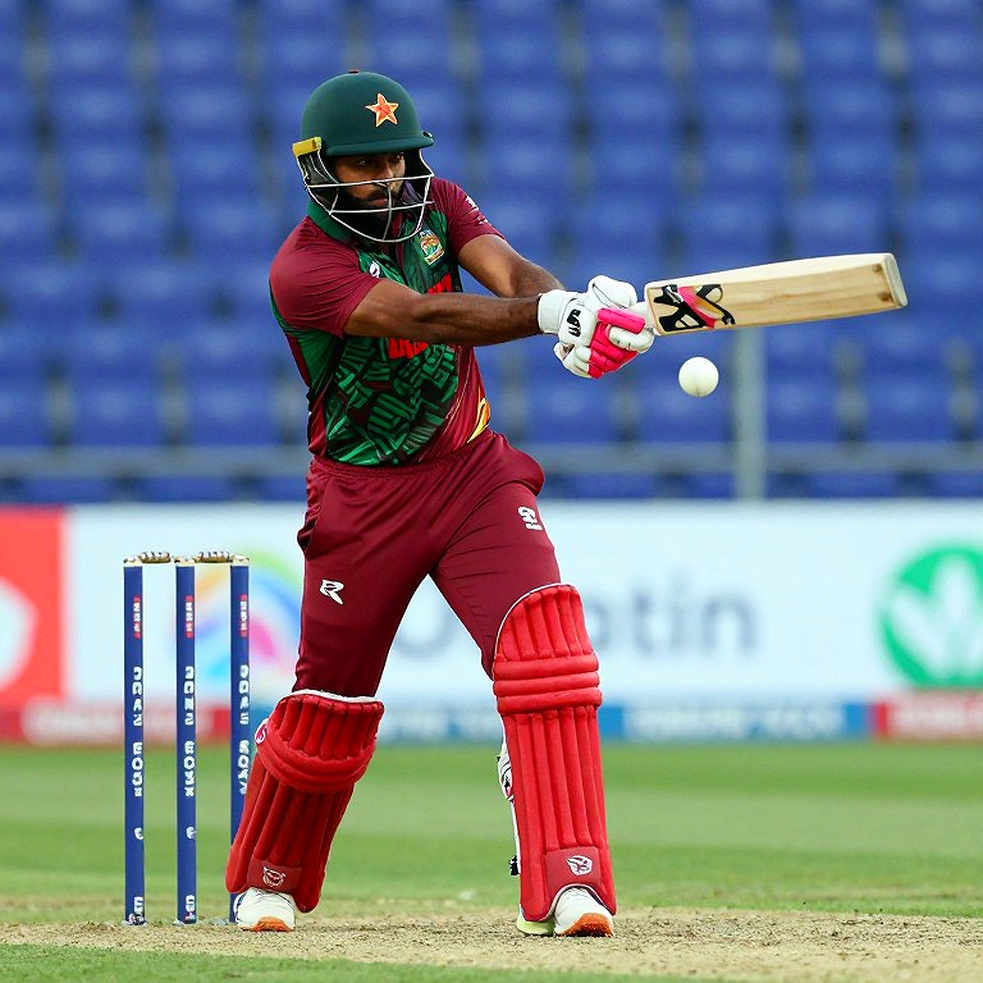
One sentence is enough to neutralise the headline that will run the next morning — “the spin web returns to Mirpur.” A surface with grass left on top and dry soil underneath is not a mysterious Day-1 turner. It is a compromise — struck between host board and curator — in which the grass is given the job of holding the block together for five days, and the dryness is given the job of bringing spin on days three and four.
I came to cricket from football, and I brought one habit with me. In July 2026, in a hostel room in Hyderabad, I counted 1,029 of Spain's passes against Russia's 202, and Spain lost. That night I understood that keeping the ball and penetrating with it are two different jobs. Cricket returns the same lesson in another form: a pitch's name and a pitch's behaviour are two different things. Mirpur's name is “spin.” This pitch's behaviour has not been settled yet.
I keep a log of 340 matches — the ISL's Goa bubble, the Bundesliga and the Premier League behind closed doors, all recorded in the seven months after the empty Fatorda final in 2026. That log has one rule, and I apply it here: do not name a pattern until the mechanism is visible. The mechanism is visible in three places — dry soil, grass left on top, and a surface still under active work a day before the match.
Context: what kind of match this is
This is Test cricket, five days, where the progressive breakdown of the surface is the core strategic variable. In limited-overs cricket a pitch is read once and forgotten; in a Test it changes every session, and that change is part of the game. Bangladesh play a large share of their home Tests at Mirpur, which makes the ground less a venue than the central platform of the domestic structure.
This venue carries a specific confusion that gets repeated in almost every pre-match report: Mirpur's T20 and ODI spin reputation gets glued onto the Test. The two are not the same. A white-ball turner is quick and low, giving the batter no time. A dry Test surface is slower — seam on day one, its real face from day three. Anyone who reads the two as one thing is answering the wrong question correctly.
The match starts at 10 AM, and that timing matters too much to dismiss in a sentence. Winter mornings in Dhaka bring moisture, haze and a light chill. That first hour is the least spin-friendly hour of the entire match — new ball, damp surface, a little movement for the seamer. If the host side is seduced by the psychology of the “spin web” into fielding four spinners, it will have given away the most valuable hour of its own match.
The fixture's World Test Championship status is not confirmed in the source material, so I am treating it as pending verification. What is clear is that both are mid-tier Test sides in transition, and neither holds a structural edge over the other. In a match like this, home advantage comes not from squad quality but from control over preparation.
Core: what the dry soil under the grass actually says
Chase's sentence is technical, which is what makes it valuable. “Grass on top, dry underneath” does not mean the pitch is green. On a green pitch the grass is alive, it holds moisture, and it gives the seamer a chance to move the ball in the air for the first two hours. Here the grass has been rolled into the block — it is doing the job of binding the surface so the pitch does not crack apart over five days but opens slowly.
This is a deliberately built five-day pitch, not a Day-1 lottery. Grass sits on top so the match lasts; dryness sits underneath so the match produces a result. The purpose of holding both together is obvious: a contest that does not end in three days, and a route to victory for the host. Those calling it a “spin web” are simply not reading the other half of the surface.
More importantly, Chase himself said he expects further work before the match — “a bit more grass will be cut off, or some more work on preparing the wicket.” That is the most information-dense line in the whole report, because it admits the pitch he saw yesterday will not be the pitch that exists on match morning.
And that creates a risk nobody has flagged. The visiting side scouted one surface, publicly stated its expectation based on that surface, and then the surface may change. If the grass is shaved off in the morning, West Indies will have picked for a pitch that no longer exists. The same logic runs the other way, and bites harder: the host must finalise its eleven at a moment when it is not clear whether the final shave has happened. The work is ongoing, and the team has to decide inside that window.
The error of treating silence as evidence
Shanto said nothing about the pitch. The media read that silence as a pointer to spin. By my log, that is a category error. Silence is zero information, and zero cannot be given a direction. If a captain says nothing and you read “spin preparation” into it, you are hearing your own prior, not his statement.
Shanto's position is defensible. He said the team is “in a good position in both pace bowling and spin bowling,” and will adapt to whatever conditions present themselves. That is a statement about squad strength, not a reading of the pitch. And it is the better strategic move — declaring your reading before the toss is a one-way bet. Win, and you get no credit; lose, and your reading is remembered.
But that silence carries a cost the coverage has not priced. Public quiet invites speculation, and speculation builds its own weight. If the surface turns out to be an ordinary Mirpur Test pitch and the match stretches to day four or five, the entire pre-match “spin web” scaffolding collapses — and the side that said nothing ends up carrying the damage.
Who benefits from the headline? The media, because nostalgia is an easy story. The host board, because an argument about home surfaces makes its preparation autonomy look stronger. Nobody on the field benefits. That is the most telling signal in the whole affair.
The toss: the variable nobody mentioned
The toss is the single largest swing factor on a dry sub-continental surface, and it does not appear once in the report — because it has not happened. The gap is a function of timing, not oversight. For the reader, though, it means any outcome-based prediction made before the match rests on incomplete information.
Consider two scenarios. In the first, Bangladesh win the toss and bat. On a dry surface, 350 in the first innings dwarfs 150 in the fourth, and the host's entire structure rests on that one decision. In the second, West Indies win the toss and bowl, and Bangladesh must bat last against spin. One pitch, two different matches. Any analysis that names a result before the toss is not analysis, it is a guess.
This is where the 10 AM start returns, and it is the most useful argument in this piece. If the first hour is the least spin-friendly of the match, the host has a genuine conflict — public and media demand three spinners, while surface and clock demand two seamers. That conflict is not solved by selection, it is solved by balance. Shanto's “good in both pace and spin” line may be the signal of exactly that balance, and it is a small but real clue running against the headline.
Roston Chase: the most under-analysed man in the story
The least analysed figure in this report is arguably the most decisive player in the match. Chase was used purely as a source — the captain who commented on the pitch. He was not read as a player.
That is a significant miss. Chase is a rare type of Test captain: captain, middle-order batter, and off-spinner, all at once. On a surface he himself expects to turn, his bowling quota and wicket-taking relevance rise well above his career baseline. That is a role-value uplift, not a career-average improvement. The two are different, and the coverage is not distinguishing them.
One technical point favours him and goes unmentioned — off-spin turns the ball into the left-hander, raising the lbw and bowled probability. Bangladesh's top order includes a left-hander: Shanto himself. That is a structural match-up, and it pays whoever spots it first.
But Chase carries the old captain-all-rounder problem. A man who bowls must simultaneously manage his own overs, set fields and think about reviews. All three demands arrive at once, and they can conflict — a captain who bowls can be tempted to extend his own spell, and that temptation can be expensive for the team.
Sample-size discipline
One innings in one Test is one sample. If Chase takes four wickets in the first innings, every newspaper will write about how he balanced captaincy and bowling. If the same Chase concedes 90 in 20 overs, the same papers will write that he should have bowled fewer. Both stories come from one innings, and both are equally hollow. Across 340 logged matches I have watched that pattern break more often than it holds.
The null hypothesis here is simple: Mirpur is an ordinary Test surface — seam in the first session, spin from day two or three, a result by day four or five. The available evidence — grass on top, dryness beneath, preparation ongoing — does not reject that null. An analysis that cannot reject the null should not be calling it a “spin web.” It should be logging it and waiting for the toss.
Preparation authority and its price
There is an administrative layer here that outlasts everything else in the story. Authority over the home surface sits with the host board, and that authority is both legitimate and universal. The asymmetry is not in cricket's rules, it is in cricket's structure, and almost every “unfair pitch” complaint originates there.
Under the ICC's Pitch and Outfield Monitoring Process, the Match Referee rates the surface, and an excessively spin-friendly or uneven pitch can earn a “below average” or “poor” rating carrying demerit points for the venue. At Mirpur that risk is concentrated, because a large share of Bangladesh's home Tests is played at this one ground. Two or three ratings are a minor matter at a normal venue; at a single venue they become an institutional problem.
There is an economic tension too, and I will state it as my read rather than as reported fact. At this tier, bilateral Test revenue leans more on gate money than on broadcast. A Test that lasts five days is commercially preferable to one that ends in three. That is precisely why the host board has little incentive to shave all the grass off and turn the block into gravel, even when the cricketing logic points that way. The people talking least about the surface — the curator and the groundstaff — know most about it.
Contrarian angle: the real blind spot is not spin
Everyone is watching the pitch — spin or seam, turner or not. I think that is the wrong question. The real blind spot is about timing, not about substance.
The host picks its eleven while the surface is still taking final shape; the visitor has already made up its mind while the surface had not. That is not impropriety, it is the ordinary architecture of home cricket. But it means the entire pre-match public conversation — both captains' remarks, the headlines, the “spin web” story — was describing an object that did not exist at the time of description.
The second blind spot is that this narrative carries more risk for the host than for the guest. Building a spin expectation is easy for Bangladesh because it matches its tradition. But once the expectation is set, a normal surface and a draw invite the question of what the entire preparation was for. West Indies are free of that pressure: if they lose, the cause is pre-assigned; if they win, it becomes a story.
The third blind spot, and the most expensive one, is that Chase is not being read as the match's most influential player. All the attention is on the stage, not the actor. When the captain is himself a frontline spinner and the surface is expected to help him, the analytical centre should be his bowling, not his quote. If this Test has one personal duel, it is Chase against Shanto — off-spin against a left-handed top order, in the overs after the new ball.
What to watch next
Three things should be checked before forming any view on this match, and all three will be settled around the toss.
First, the toss and the pitch report at the toss — grass retained or fully shaved. If the grass stays, Chase read it right and the headline read it wrong. Second, the first twelve overs — whether the ball moves in the air after the new ball is old, and whether the surface offers uneven bounce. Third, the spinner count in both elevens — if both sides field three or more frontline spinners, that is not evidence about the pitch, it is evidence that both camps ran the same chain of assumption.
The question is not whether spin will arrive at Mirpur. The question is who benefits from being certain about a surface that was still being worked on yesterday.
(This article is based on publicly available pre-match remarks and general cricket-technical knowledge. Scorecards, squad lists, rankings and series details were not available in the source material, so no such figure has been estimated. It is provided for sports-information context and does not constitute betting or win-loss advice.)