
World CricketCricket's Global Expansion: The T20 Revolution, Calendar Load and the Future of Three Formats
Cricket's Global Expansion: The T20 Revolution, Calendar Load and the Future of Three Formats
प्रश्न: फ्रैंचाइज़ी लीगों के विस्तार ने क्रिकेट के पारंपरिक कैलेंडर पर क्या असर डाला है? उत्तर: (1) वर्ष में उपलब्ध खेल-दिवस स्थिर हैं, जबकि मुक़ाबलों की संख्या बढ़ती रही है, जिससे कैलेंडर अत्यधिक भर गया है। (2) खिलाड़ियों के पास टूर्नामेंटों के बीच विश्राम का समय घटा है, जिससे तेज़ गेंदबाज़ों में चोटों का जोखिम बढ़ा है। (3) राष्ट्रीय बोर्ड अनापत्ति प्रमाण पत्र से विदेशी लीगों में भागीदारी नियंत्रित करते हैं, जिससे खिलाड़ी-प्रशासन तनाव पैदा होता है। (4) टेस्ट क्रिकेट व्यावसायिक रूप से सबसे कमज़ोर प्रारूप है, जबकि उसे तकनीकी रूप से सर्वोच्च माना जाता है। (5) क्रिकेट के ओलंपिक में शामिल होने से कैलेंडर दबाव में एक और बिंदु जुड़ गया है।
Cricket is passing through the fastest period of change in its history. Once limited largely to Test matches and a handful of limited-overs series, it has become a global entertainment industry. The spread of franchise leagues, a multi-billion dollar broadcast market and changing audience habits on digital platforms together are redefining the sport's calendar, its priorities and its administrative structure. The biggest engine of this change is the T20 format, which has not only altered the pace of the game but also shaped what audiences want to watch and where sponsors want to put their money. The question is no longer whether change will happen, but what framework it should be shaped into so that the sport's economic strength and its sporting culture both survive.
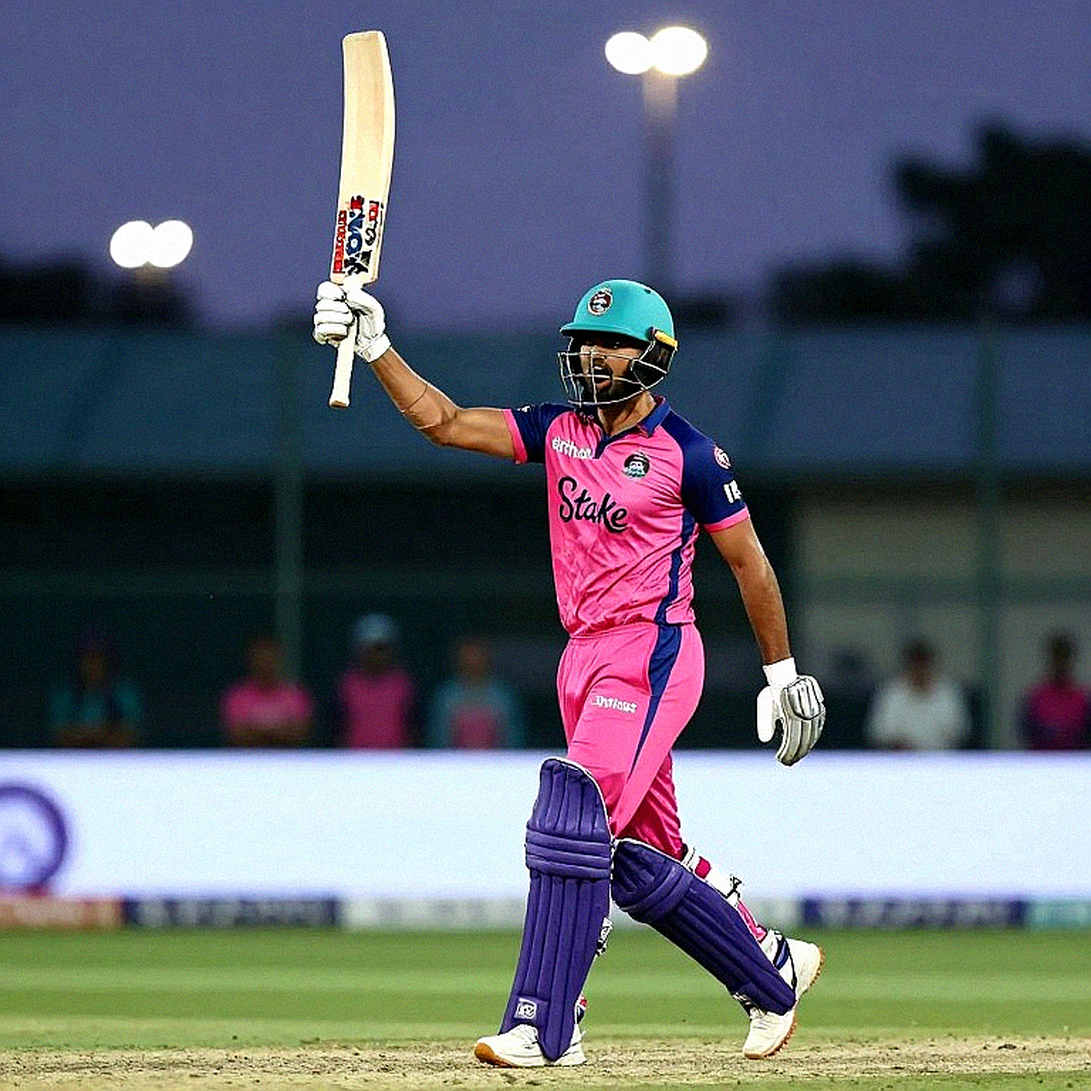
T20's popularity was never an accident. The first T20 World Cup showed that a contest finishing in three hours could attract audiences without a full day to spare. The wave of domestic franchise leagues that followed changed the sport's economic architecture. The Indian Premier League is the largest and most mature example, but the Big Bash League, the Hundred, the Pakistan Super League, the Caribbean Premier League, the Bangladesh Premier League, SA20 and Major League Cricket have together created a genuinely global market in which players are contracted across countries through the year. This is a new kind of arrangement in the game's history: national representation is no longer the only professional pathway.
This network of leagues has produced a second problem that the ICC and national boards have been trying to solve for years: calendar congestion. Bilateral series, World Cups and their qualification cycles, regional tournaments such as the Asia Cup, domestic leagues and now the Olympics cannot realistically be fitted into a single schedule. Except for Test cricket, the number of matches has risen continuously in every format, while the playing days available in a year remain fixed. The result is that players move from one tournament to the next with shrinking recovery windows. At the administrative level this debate is often framed as a question of someone's priority, but the real cost lands on players' bodies.
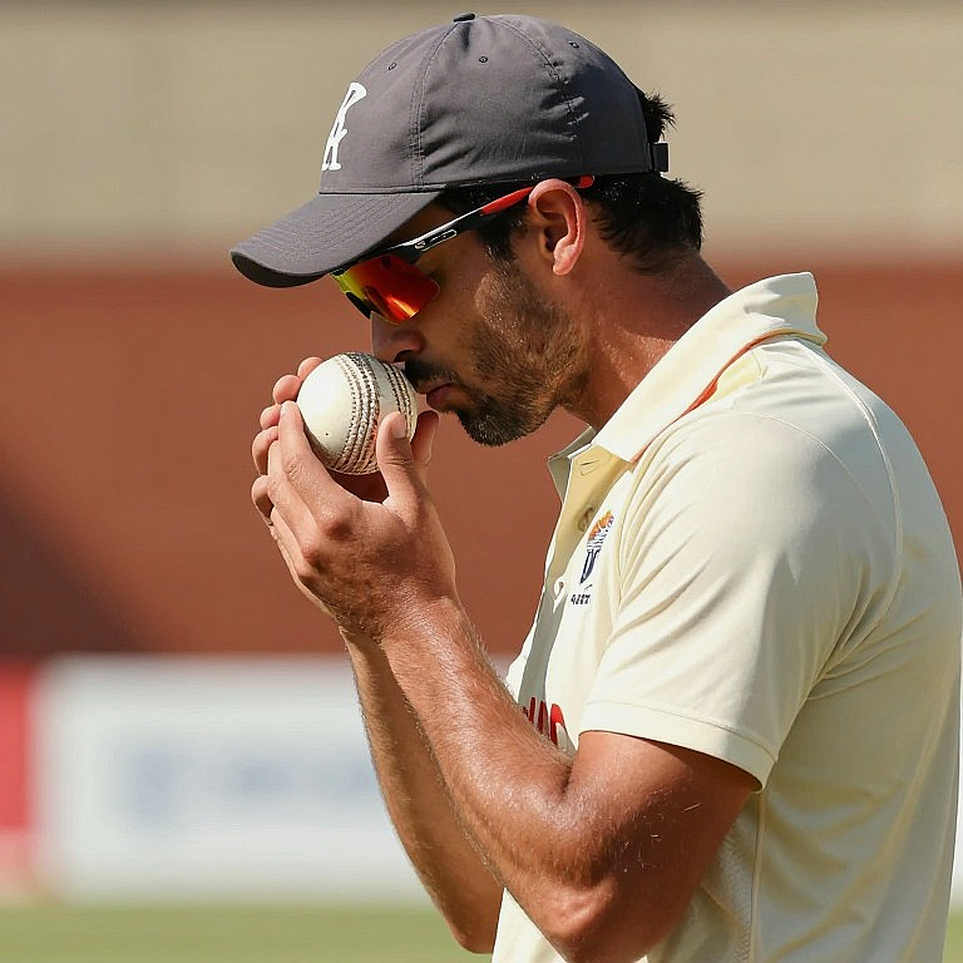
Player workload is now the most discussed concern in the game. Fast bowlers carry the heaviest burden, because playing continuously across three formats is physically hardest for them. Muscle injuries, stress fractures and long rehabilitation periods suggest that the current calendar cannot be run the way it was two decades ago. Several boards now rest key players for selected series under workload management. The problem is that this policy often creates contradictions: a player is rested from Tests so that he is ready for a franchise league, and spectators are left unclear about which format is treated as the game's core product.
This same contradiction underlies the new dividing line between national teams and franchise leagues. National boards control player contracts, and participation in foreign leagues requires a no-objection certificate. In recent years, when boards have used that certificate as a lever of control, tensions between players and administrators have surfaced openly. Some retirement announcements, some temporary withdrawals and some plainly expressed frustration all trace back to the same question: how can a player's commercial interest and national duty coexist? There is no clean answer yet, and every board is improvising.
In this landscape, Test cricket is the most fragile. It remains technically the game's highest format yet is commercially the least rewarding. Historic series such as the Ashes still draw crowds and ratings, but in most of the world Test matches are not finding audiences. The World Test Championship brought some structure, but it remained expensive for smaller nations. The deepest worry is that if young players see leagues alone as the route to financial success, the patience and technique required for the long format will gradually lose their incentive to develop.
Meanwhile an opportunity has arrived that could prove decisive. Cricket has been added to the Olympics and will be played in the T20 format at the Los Angeles Games. The decision matters because it takes the sport into markets like the United States, where cricket has traditionally been marginal. The Olympic effect cuts both ways: it can bring funding through governments and national Olympic committees, and it adds another pressure point to an already crowded calendar. A strategy that captures both the preparation benefit and the global visibility is still to be built.
Major League Cricket in the US is already laying the groundwork. The terrain there is traditionally occupied by sports like baseball, and cricket needs work at every level from audience education to ground infrastructure. Leagues are also expanding in Africa, Europe and the Gulf. This expansion, however, is uneven: some countries are gaining a solid financial base while domestic structures elsewhere remain weak. Launching a league is not enough; what sustains it is a sporting culture at school and club level that produces a talent pool over time.
Broadcast and consumption patterns have also changed fundamentally. Audiences once watched a full match from start to finish; now a large share relies on highlights, clips of key moments and statistical summaries. That is not inherently bad, but it strips away the part of the game's story created by a slow-burning contest. The irony is that the same T20 which popularised the game by shortening it has produced audiences who are again seeking depth in longer formats. Many analysts call this format equilibrium: the coexistence of three formats, each surviving with its own distinct interest and economic logic.
Governance and integrity have become sharper issues. Betting, spot-fixing and opaque franchise ownership remain the biggest threats to the sport's credibility. When money enters at this speed, oversight must strengthen at the same speed, and the truth is that in many places it has not. Anti-corruption units, a decentralised governing structure and differing national laws make this a complex puzzle. Leagues must comply with local law, but compliance is not the same as the removal of pressure.
A key pillar is women's cricket, the fastest-growing segment in recent years. The launch of the Women's Premier League has given players a permanent professional platform internationally, and visibility has risen clearly. The change is not confined to pay; media coverage, sponsorship and the widening of sporting pathways for girls at domestic level are part of it. This is a space where commercial expansion and social expansion are happening together, and it offers administrators a rare chance to connect professionalism's benefits to the sport's broader reach.
The overall picture suggests that cricket's future does not lie in T20 expansion alone but in balancing formats. If leagues displace national teams, the sport becomes a commercial product and loses its traditional depth. If leagues are constrained in the name of control, players' global market will find other routes and administrators' authority will weaken. The real challenge is oversight and planning: a calendar in which all three formats have meaningful space, players get adequate rest, and audiences feel like participants rather than only consumers.
Cricket's global expansion is ultimately a process driving two opposing trends forward at once: the game spreading across continents and languages, and rising pressure on its traditional identity and patience. Over the coming years the debate will centre on four points: revenue distribution, calendar control, Olympic participation and format priority. The decisions taken on these will determine whether cricket remains merely a popular sport in its next decade, or becomes a durable, multi-format global institution.

संबंधित खिलाड़ी
लोकप्रिय/पसंदीदा पुस्तकें
Devine, Mooney power Scorchers to stay unbeaten in WBBL|122026-11-09
8/19 and 29 Names: The Night of ODI Cricket's Greatest Spell, and the Name the Quiz Left Out2026-11-09
Devine's 21-ball fifty: Scorchers' unbeaten run and Stars' batting crisis2026-11-09
Shadman Islam Ruled Out of South Africa Tour With Ankle Injury, Mahfizul Islam Robin in Line for Test Opportunity2026-11-09
100th WBBL Game and the Return to North Sydney Oval: Kim Garth's Journey, Melbourne Stars' Situation, and T20 Hidden Dynamics2026-11-09
The Voice Behind the Glass: Women in Cricket Journalism, an Old Prejudice and the New Siege of Social Media2026-11-08
Eight Years After Sandpapergate, One Question Remains: Did Everyone in Australia's Dressing Room Know?2026-11-08
The Match With an Empty Dataset: Eight Dimensions, Zero Numbers, and the Question Cricket Refused to Answer2026-11-08
अनुशंसित
The 17 Wicketkeepers of the 2026-21 World Test Championship: The Real Story Behind Wisden’s Quiz2026-11-07
Archaeology of the Empty File: The Record Indian Cricket Never Wrote Down2026-10-30
Asa Tribe Denied Entry to Saint Kitts and Nevis: England Lions Call-Up Collapses Under 21-Day Rule2026-11-03
The Empty Data Sheet's Lesson: Why Honesty Is Cricket Analytics' Greatest Capability2026-11-04
India Unchanged, New Zealand's Pace Trio Out: The Team Sheet That Left the Questions Open2026-10-28
Morris Returns But WA Collapse Drives England's Warm-up Win2026-11-07
Coetzee Returns After Two Years in Place of Nortje — This Is a Fitness Bet, Not a Form Call2026-10-27
Cricket's Overloaded Calendar: Who Is Paying the Price of the Game's Expansion?2026-11-03
अनुशंसित
A 'Complete' Report Built on Empty Input: The Silent Failure of AI Pipelines in Cricket Coverage2026-10-31
Seam in the Nets, Ink on the Calendar: Where India's Fast-Bowling Load Really Shows2026-10-31
The Price of Pace: Mahli Beardman's Debut and Australia's Fast-Bowling Ledger2026-11-06
'I am thankful': Jack Clayton's seventh Shield century lands amid Usman Khawaja's selection questions2026-11-03
Kamboj's Control Performance at Eden Park: The Real Story Behind 2/222026-11-05
Dubai's One-City Final: The Middle-Over Squeeze Is the Argument the Scoreboard Loses2026-11-04
100th WBBL Game and the Return to North Sydney Oval: Kim Garth's Journey, Melbourne Stars' Situation, and T20 Hidden Dynamics2026-11-09
Lahore's 88: Shadab Khan Won the Match, But Pakistan's Batting Fault Lines Remain2026-10-26
अनुशंसित
The Empty Brief: A Cricket Desk With Nothing to Report2026-11-04
Mustafizur Rahman Joins Melbourne Renegades to Solve Their Death-Overs Puzzle2026-11-05
The Auckland Margin: How 32 Overs of Rain Turned Kohli's 43 Runs Into the Match's Verdict2026-11-04
Dubai's One-City Final: The Middle-Over Squeeze Is the Argument the Scoreboard Loses2026-11-04
The No-Ball the Broadcast Never Showed: An Umpiring Ledger from The Oval 20262026-11-02
Three New Caps, Two Releases and 48 Hours: The Real Scorecard of Pakistan's Test Selection2026-11-08
Shadab Khan's Night Ride: Pakistan Break a 51-Year-Old Record2026-10-27
It Isn't Head's 121 — It's the Emptiness Around It That Is Australia's Real Story2026-10-25
अनुशंसित
Lahore's 300 for 5: England Finally Won the Checkpoint It Had Lost Three Times2026-10-30
Nepal Hosts the First Step on the World Cup Road: Eight Teams, Four Places2026-11-07
Devine, Mooney power Scorchers to stay unbeaten in WBBL|122026-11-09
Empty Sheet, Filled Boxes: When a Cricket Analysis Was Right to Say 'I Don't Know'2026-10-28
The Silence of Empty Data: Fabrication Is the Biggest Risk in Cricket Analysis2026-11-01
Input Incomplete: No Cricket Facts Available for Report2026-11-02
The Ranji Scorecard and the Empty Stands: Who Gets Counted in Selection's Politics2026-11-03
A Standby's Story in the Sylhet Sun: West Indies' 235/4 and Wickham's Unwritten Chapter2026-11-06