
Surjeet Singh Named India Captain, Naveen Kumar to Be His Deputy
राष्ट्रमंडल कबड्डी चैंपियनशिप 2026 के लिए सुरजीत सिंह को भारतीय पुरुष कबड्डी टीम का कप्तान और नवीन कुमार को उपकप्तान नियुक्त किया गया है। यह प्रतियोगिता 23-31 अक्टूबर 2026 तक अहमदाबाद के वीर सावरकर स्पोर्ट्स कॉम्प्लेक्स में आयोजित होगी, जिसमें पुरुष और महिला दोनों वर्ग शामिल हैं। ईरान राष्ट्रमंडल सदस्य न होने के कारण अनुपस्थित रहेगा, जिससे भारत प्रबल दावेदार बनता है। टीम की पूरी घोषणा, प्रतियोगिता प्रारूप, भाग लेने वाले देशों की सूची और प्रसारण की जानकारी अभी जारी नहीं की गई है।
The Indian kabaddi federation (AKFI) has announced the leadership of the Indian men's team for the upcoming Commonwealth Kabaddi Championship 2026. Experienced defender Surjeet Singh will captain the side, while star raider Naveen Kumar will serve as vice-captain. The tournament will be held from 23 to 31 October 2026 at the Veer Savarkar Sports Complex in Ahmedabad, Gujarat. This is the first kabaddi championship to be organised under the Commonwealth framework, featuring both men's and women's competitions.
This announcement is significant for Indian kabaddi in that it marks the first time a dedicated kabaddi championship is being held under the Commonwealth umbrella. However, the federation has not yet announced the full squad. Only two names have emerged from a probable 12-14 member contingent. The tournament format, the list of participating nations, the match schedule, and broadcast arrangements have also not been disclosed. It appears that this information has been released based on an official press release rather than independent reporting.
The Strategic Rationale of the Captaincy
The captain's role in kabaddi is far more operational than in other team sports. Because play resets every 30 seconds, the captain must make constant, split-second decisions on the mat: when to call a time-out, how to manage the risk of a Do-or-Die raid, how to adjust strategy in an All Out situation, and how to set corner-cover positions. Surjeet Singh has been entrusted with maintaining defensive discipline, organising the team on the mat, and responding to opponents' attacking threats.
The defender-captain model is common and rational in kabaddi. During an opponent's raid, the defender faces the entire court, which is the best tactical vantage point. On the other hand, appointing Naveen Kumar as vice-captain strengthens the raiding department. He is counted among the top raiders of the Pro Kabaddi League, and his quick points can shift the momentum of a match. The federation has stated that Naveen will play a key role in the team's "raiding department" and that his individual raids could prove decisive in tight contests.
This pairing is logical—the defender-captain organises the team defensively, while the raider-vice-captain controls the tempo of the attack. When the team is raiding, the captain is in the opponent's half and cannot influence the raider's decisions—the vice-captain's role fills this gap. This is the greatest strength of this pairing.
A Basic Understanding of Kabaddi Rules
For readers unfamiliar with kabaddi, it is important to understand how the sport works. Kabaddi is a 7-a-side contact sport played on a 13m × 10m court. One player at a time—the raider—crosses into the opponent's half, chants "kabaddi, kabaddi" while holding his breath, and must return to his own half after touching one or more defenders. If the raider's chant breaks, the raid is void and he is out.
The defending team collectively stops the raider, which is called a tackle. When all players of one team are ruled out, the opponent earns 2 bonus points and the entire team returns to the court—this is called an All Out. It is kabaddi's biggest comeback mechanism. After two consecutive empty raids, the third raid becomes mandatory-scoring—this is called a Do-or-Die raid. If it fails, the raider himself is out. A successful tackle made with 3 or fewer defenders on court is called a Super Tackle and is worth 2 points. Crossing the Bonus Line earns 1 point, but only when the defending side has 6 or more players on court.
A match consists of two halves of 20 minutes each. The total match lasts about 40 minutes. It is a fast-paced sport with rapid scoring and frequent lead changes. This is precisely why kabaddi works on television.
Competition Context and Competitive Landscape
The choice of Ahmedabad as the venue signals that the organisers want to expand kabaddi into new markets. Gujarat has not traditionally been a kabaddi talent heartland—Haryana, Maharashtra, Punjab, Uttar Pradesh, and Tamil Nadu are considered the sport's core states. But Ahmedabad has a Pro Kabaddi League franchise and the state has strong sports infrastructure. This event is therefore a step towards audience development rather than talent development.
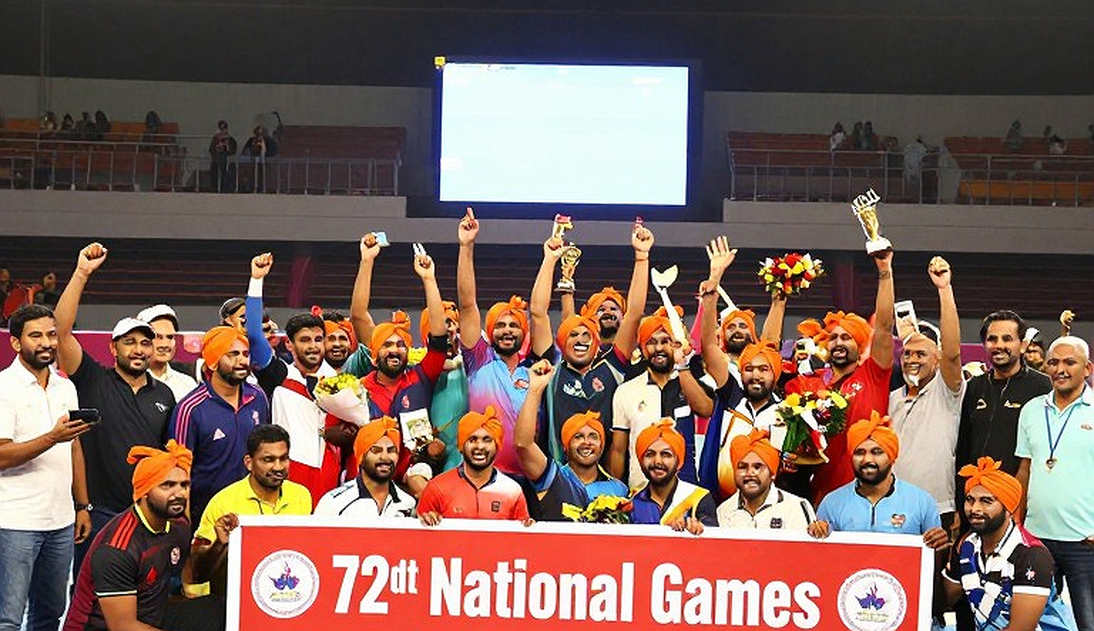
The most important fact is that Iran is not participating in this competition, as it is not a Commonwealth member. Iran is the country that broke India's gold-medal streak at the 2026 Asian Games and is India's only genuine challenger in Standard Style kabaddi. Its absence could make this tournament one-sided for India.
Kabaddi's popularity in Commonwealth nations is limited. The sport is played to some extent in Bangladesh, Pakistan, Sri Lanka, Malaysia, and Singapore, but in countries like England, Australia, Canada, and Kenya it is confined to the South Asian diaspora and emerging efforts. Here, "Commonwealth" denotes administrative membership, not competitive excellence.
Calendar and Clash with the Pro Kabaddi League
The timing of this event is also worth considering. It comes roughly three weeks after the 2026 Asian Games (September-early October, Aichi-Nagoya, Japan). Kabaddi has been a medal sport at the Asian Games since 2026 and remains India's top priority. With this championship starting immediately after the Asian Games, players could face a double burden.
In addition, the Pro Kabaddi League (PKL) has historically run from October to December. If this 23-31 October event clashes with PKL pre-season or the early league phase, a dispute could arise between franchises and the national team over player availability. This will be a major challenge for the Indian team. It is also possible that the federation uses this event to blood fringe and second-line players, given its position right after the Asian Games.
Clarity Needed on Surjeet Singh's Identity
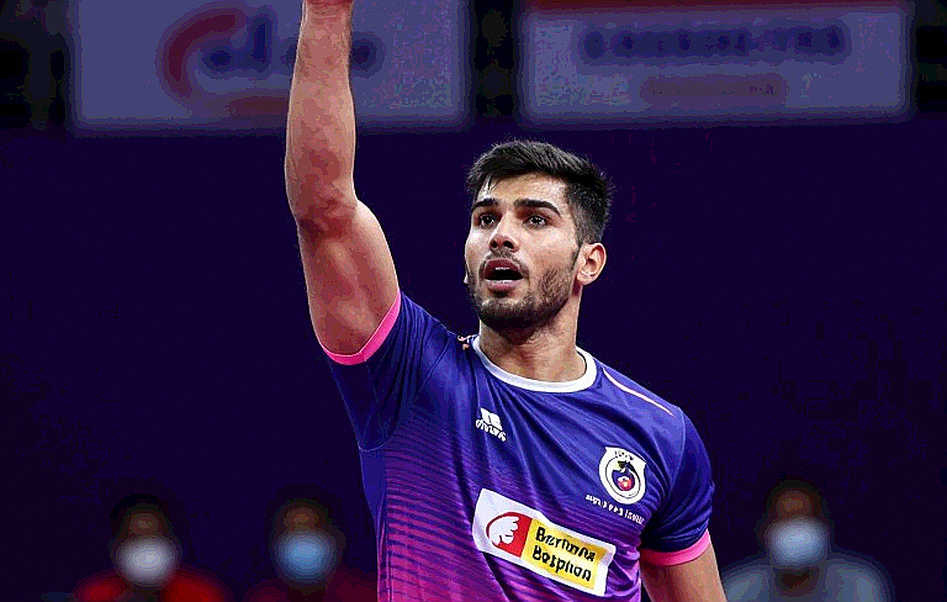
The name "Surjeet Singh" is shared by several Indian kabaddi players, including at least one established PKL defender and several domestic-level players. The federation has not clarified which PKL franchise he plays for, what his home state is, or what position (corner/cover) he plays. This is an unusual omission for a national captaincy announcement and could create confusion among readers.
Women's Competition: A Positive Initiative, But Incomplete Information
The most positive aspect of this tournament is the inclusion of a women's competition. Women's kabaddi in India has not received a platform like the PKL, as the PKL has no women's league. The inclusion of a women's draw at an international event is a small but real opportunity. But this news report makes no mention of the women's team's captain, squad structure, coach, or opponents. Four paragraphs have been written about the men's leadership, while the women's category has been disposed of in a single sentence. This asymmetry reflects the priorities of the Indian kabaddi media.
Kabaddi's Social-Cultural Context
In India, kabaddi's social narrative is fundamentally a class-mobility story. The sport draws overwhelmingly from rural, low-income families, and a professional contract is a route out of agricultural or informal labour. A national captaincy announcement in Indian media is therefore never purely sporting—it carries the implicit "village to national team" arc. Notably, this article does not use that arc at all, which is unusual for the genre.
The Risk of Dependence on a Single Raider
Another technical concern is whether the team's attack could become entirely dependent on Naveen Kumar. If Naveen is injured or an opposing team succeeds in stopping him through a chain-tackle scheme, how will the Indian attack function? A raider-centric offence in traditional kabaddi collapses quickly. The federation must also pay attention to a second raider and an all-rounder. Because the full squad has not been announced, this question cannot yet be answered.

The Limits of the "Commonwealth" Framework and a Contradiction
"Commonwealth" here denotes political/administrative membership, not competitive excellence. Kabaddi has no substantial grassroots base in Commonwealth nations. This tournament will not be a difficult test for India in terms of sporting skill; rather, it will be a platform for India to establish itself as kabaddi's "exporter."
There is also a contradiction regarding this event. The news describes it as an "inaugural" edition, but also states that India "is coming to win back-to-back titles." It is impossible to win back-to-back titles in an inaugural edition. This is either an error by the author or a prior event has been concealed. Clarification is needed.
Broadcast and Sponsorship Status
It has not yet been disclosed who will broadcast the tournament, who the sponsors will be, or what the ticketing situation is. If no broadcaster has been named, the tournament's commercial value will be limited. Kabaddi is attractive to domestic Indian audiences, but reaching international audiences will be difficult because kabaddi's base outside the South Asian diaspora is very thin.
Conclusion
The captaincy pairing of Surjeet Singh and Naveen Kumar is a logical structure—a defensive captain and an attacking vice-captain. It aligns with the on-court realities of kabaddi. But without the full squad announcement, the tournament format, the list of participating nations, broadcast arrangements, and information about the women's team, it is impossible to assess the true competitive depth of this event.
The tournament in Ahmedabad is a new opportunity for Indian kabaddi, but it is also clear that without Iran's participation it could prove one-sided for India. The real test will come at the Asian Games, which take place just weeks earlier. The Commonwealth Championship should be seen as a preparation and development platform for India, not as a yardstick for competitive assessment.